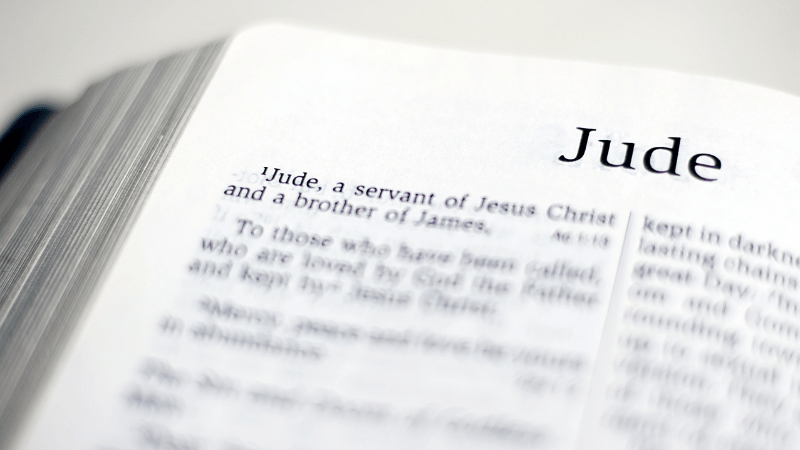
Though only one chapter long, the Book of Jude delivers a weighty and urgent message to the church. Written to believers facing internal corruption and false teaching, Jude calls Christians to stand firm in the faith once for all delivered to the saints (Jude 3). Jude powerfully reinforces the doctrines of God’s sovereignty, the seriousness of sound doctrine, and the assurance of God’s preserving grace.
1. The Faith Is Objective and Unchanging
Jude emphasizes that “the faith” has been once for all delivered (v. 3). This affirms the Reformed conviction that divine truth is not evolving or subject to cultural reinterpretation. The gospel is a fixed body of revealed truth entrusted to the church. Our calling is not to reshape it but to guard it faithfully, proclaiming what God has already spoken.
2. False Teachers Are a Real and Persistent Threat
Jude offers sobering warnings about false teachers who creep into the church unnoticed (v. 4). These individuals distort grace into license and deny the lordship of Christ. This underscores the necessity of doctrinal discernment, faithful preaching, and biblical church leadership. Error often enters quietly, making vigilance essential.
3. God Is Sovereign Over Judgment and Salvation
Throughout the letter, Jude references historical examples of God’s judgment—unbelieving Israel, fallen angels, Sodom and Gomorrah—to remind readers that God is holy and just. These examples highlight that judgment is not arbitrary but sovereign and righteous. At the same time, Jude affirms God’s mercy toward those who are truly His, reinforcing the emphasis on God’s sovereign will in both salvation and judgment.
4. Perseverance Is God’s Work, Not Ours
One of the most comforting themes in Jude is the doctrine of perseverance. Believers are called to “keep yourselves in the love of God” (v. 21), yet the letter concludes by grounding our security not in human effort but in divine power: God “is able to keep you from stumbling” (v. 24). This aligns clearly with the Reformed doctrine of the perseverance of the saints—God preserves those He has called.
5. Sound Doctrine Fuels Godly Living
Jude does not separate belief from behavior. False doctrine leads to ungodly living, while true faith produces holiness. Reformed theology has long emphasized that right doctrine leads to right living—not as a means of earning salvation, but as the fruit of regeneration. Jude reminds us that theology matters because it shapes how we live before a holy God.
6. God’s Glory Is the Ultimate End
The doxology at the close of Jude centers everything on God’s glory, majesty, dominion, and authority. The ultimate aim of guarding the faith, contending for truth, and persevering through trials is not self-preservation, but the exaltation of God. This God-centered focus lies at the heart of Reformed theology.
Conclusion
The Book of Jude is a timely reminder that the church must be both doctrinally grounded and spiritually vigilant. It calls believers to contend for the faith without fear, to trust in God’s sovereign purposes, and to rest in His preserving grace. In a world of shifting beliefs, Jude anchors us firmly in the unchanging truth and power of God—who alone is able to keep His people and present them blameless before His glory with great joy.
 Dawn Zauner